If you've ever tried to run a volunteer-led project, you'll recognise two failure modes.
The first sits with the charity. When someone is donating their time, you're often so grateful for it that you can't bring yourself to push back on quality. You can't chase a deadline. You feel uncomfortable saying "this isn't quite right, can you redo it?" without feeling ungrateful, and most charity staff I've spoken to would rather quietly accept a half-finished thing than risk the relationship with someone who's been generous. So the charity accepts what it gets.
The second sits with the professional. If you've ever offered to help a charity in your spare time and watched the project slowly evaporate from your calendar, displaced by paid work, family or caring responsibilities, a dozen quietly more urgent things, you'll know there's no real grievance available to anyone if it doesn't get done. You did your best. They were grateful for what they got. Nobody's wronged. And nothing's finished.
Goodwill, on its own, produces no grievance. That's its strength as a social bond and its weakness as a way to get anything finished on a deadline.
What payment actually does
There's a well-known study from behavioural economics (Gneezy & Rustichini, 2000) where ten daycare centres introduced a small fine for parents who picked their children up late. The researchers expected fewer late pickups. Late pickups roughly doubled. When the fine was withdrawn, they stayed high.
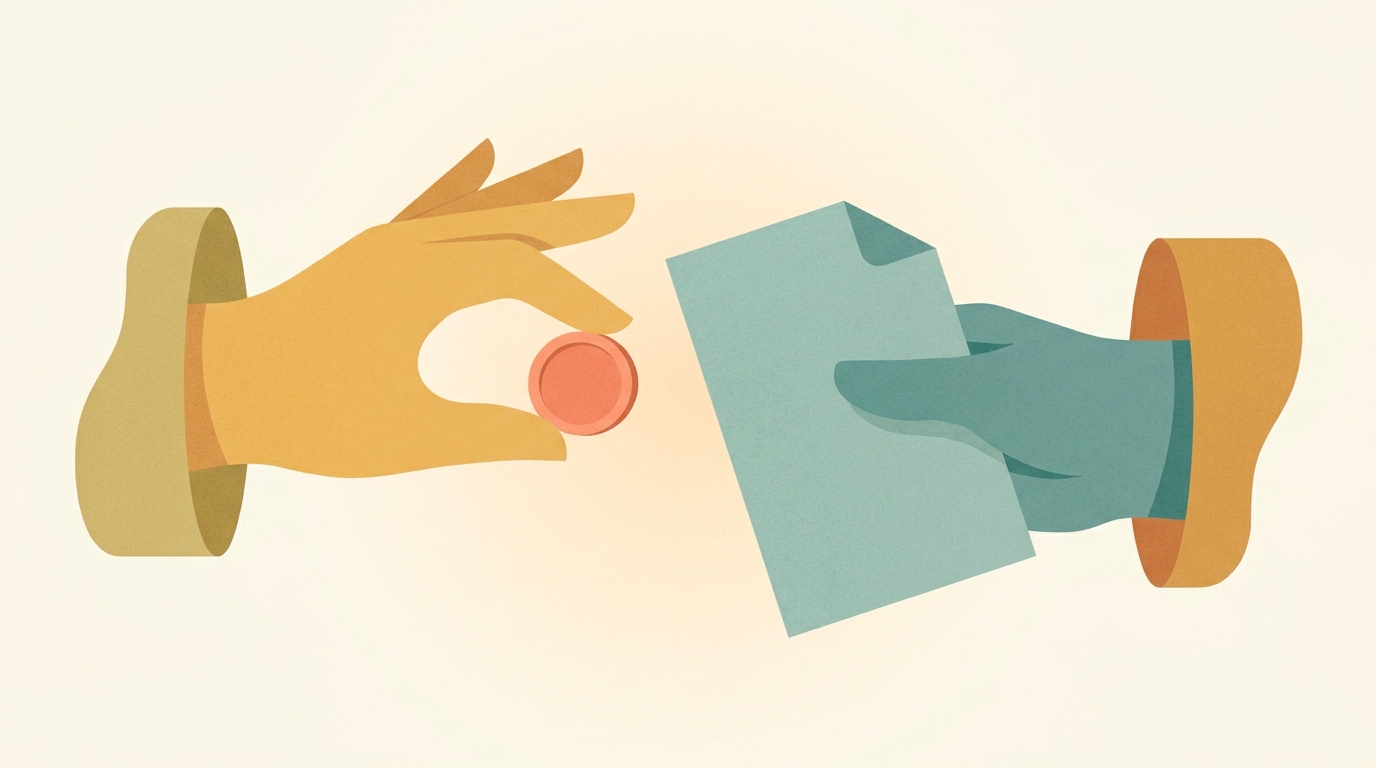
The fine, it turned out, hadn't been read as a punishment, but as a price. The vague social obligation parents felt - that being late was rude to teachers - was replaced by a transaction. The relationship had moved into a different category, and it didn't move back.
Dan Ariely, writing about a different version of the same effect, puts it crisply: "Once market norms enter our considerations, the social norms depart". Money tells everyone which game they're playing.
That sounds like an argument against payment, and in some directions it is. Token payments - a fiver, a thank-you tenner - really can be worse than nothing.
But the same lever works in the other direction. If a payment is large enough that both sides read it as professional, the relationship reorganises around the disciplines of professional work: scoping, contracts, deadlines, the right to give honest feedback, the right to expect delivery. None of those are about the money itself, they're what the money brings with it.
"It's not about the money per se"
When we first started talking to professionals about Rendered, this came up in language people would arrive at unprompted. "Even modest payment changes the relationship completely," one of them told me. "It's not about the money per se. It's about what payment signals — that this is professional work that's valued."
Almost everyone we've spoken to has said some version of that. People who would happily volunteer occasionally have told us they wouldn't take a charity project as seriously without a contract, an invoice, and a number - even a small one - at the end of it. Not because they're mercenary, but because they know what survives a busy week and what doesn't.
The point isn't that a small payment compensates them. Nobody on Rendered is being compensated, in any honest sense, at twenty to twenty-five per cent of their commercial rate. The point is that the payment makes the work behave like work. It goes in the calendar and it gets finished.
So why not just charge commercial rates?
If payment is what makes the difference, why aren't we charging full price?
Because the goal of Rendered isn't to maximise revenue per engagement. It's to maximise the number of small charities who actually get the help they need. Commercial consultants charge between £600 and £1,500 a day. That's affordable for the largest four per cent of UK charities — the ones who account for almost all of the sector's spending — and out of reach for the rest. The other ninety-six per cent are simply going without.
Our rate has to do two jobs at once. It has to be high enough to produce professional norms rather than only goodwill, and low enough that a charity with an income of £200,000 can actually buy it.
Payment is the thing that makes the rest possible
There's a piece of advice that's been circulating in the pro bono world for years, originally from Aaron Hurst, who founded the Taproot Foundation. He tells charities receiving pro bono help to "act like a paying client" — to scope properly, to set deadlines, to give feedback as if money were on the table. It's probably the most honest thing anyone in the sector has said about why pro bono so often falls over.
Our argument is that small charities shouldn't have to act like a paying client. They should just be one, at a price they can actually pay.
That's why Rendered looks the way it does. Payment is the thing that lets a charity rely on the work, plan around it, and come back to it next quarter. That's what small charities have been quietly going without.
Interested in what we're building?
Rendered connects skilled professionals with nonprofits for meaningful, paid project work.
Stay in the loop
Observations on matching professionals with nonprofits that need their skills. No spam. Unsubscribe anytime.